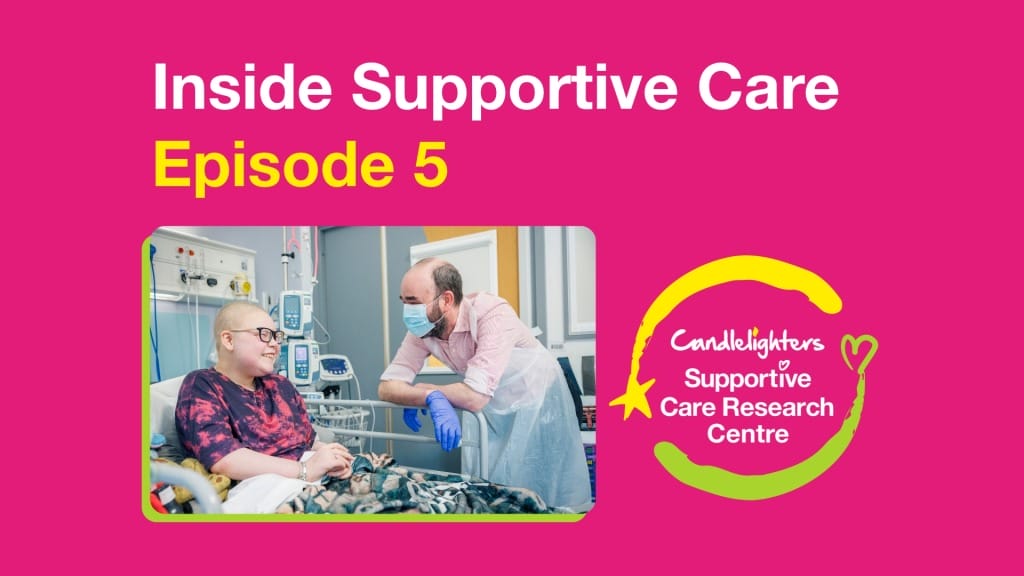
In our new video series, ‘Inside Supportive Care’, we’re taking you behind the scenes of the Candlelighters Supportive Care Research Centre.
With a £1 million, five-year investment, we’re leading research that can transform treatment experiences and improve young lives in the UK and internationally, and that all starts with putting the experiences of patients and families at the heart of the research.
Febrile neutropenia is a fever that can occur during chemotherapy, and can indicate a serious, sometimes life-threatening infection. Historically, this has meant automatic admission to hospital for every child, regardless of how ill they may be.
In this episode of ‘Inside Supportive Care’, Professor Bob Phillips talks about the work the Candlelighters Supportive Care Research Centre (CSCRC) is doing to reduce hospital stays and improve treatment and experiences for children and young people with cancer who experience febrile neutropenia.
“2020 started, and we had the worldwide COVID-19 pandemic, and people then got very interested in getting kids out of hospital as fast as possible – as safely as possible, but as quickly as possible. And we already had that system.” Professor Bob Phillips explains.
Through international collaborative research involving the Candlelighters Supportive Care Research Centre, new approaches have been developed, helping doctors to identify children who can safely be treated differently.
By reducing hospital stays and identifying which children can return home safely, this helps get young people and their families back to the environments they are most comfortable in and reduces disruption to their daily lives, helping to reduce stress at an already difficult time.
And this is just the beginning. Professor Bob Phillips, alongside Dr Jess Morgan and Dr Gabrielle Haeusler collaborated to share the new system beyond the COVID-19 pandemic, working to get more children and young people home quickly and safely – something families had also identified as a key priority in the Centre’s patient parent involvement sessions.
This is all part of the Centre’s work to improve children and young people’s experience of living through and beyond cancer, and learning from their experiences to shape and improve research.