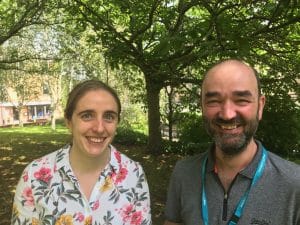
Dr Amanda Friend has recently taken on a new role as a consultant in paediatric oncology at Birmingham Children’s Hospital, following the completion of her medical training. It’s a milestone in a career that combines her passion for supporting young people with her dedication to improving long-term outcomes for childhood cancer survivors. During her time as a Candlelighters-funded clinical research fellow, Amanda focused on the late effects of cancer treatment — specifically, the long-term impact on mental health and fertility in children and young people who have survived cancer. Her research has contributed to growing national awareness of the importance of quality survivorship, beyond just cure rates. “I was particularly interested in how treatment affects young people’s future lives,” she explains. “Mental wellbeing and fertility are often overlooked, but they’re incredibly important. I was lucky to present my research at international conferences, which included trips to Washington D.C. and Lyon.” Amanda was also part of a Candlelighters-backed project at the University of Leeds investigating fertility preservation in young cancer patients. The research found that while up to one in five young people are at risk of infertility due to cancer treatment, access to fertility preservation services is highly inconsistent across the UK. The findings are now helping inform discussions with NHS England, with the goal of establishing centrally commissioned services to ensure equitable access for all patients. Leeds Teaching Hospitals, where the research took place, remains one of only two centres in England equipped to offer regulated fertility preservation procedures to all eligible patients. Now working as a consultant, Amanda is continuing this important work. She has a particular interest in teenage and young adult (TYA) cancer care, which she was able to develop during her PhD. She now serves as the TYA lead at Birmingham Children’s Hospital and is spearheading a local project to improve transition between paediatric and adult services — a crucial step for many young people navigating life after cancer. Outside of work, Amanda enjoys reading, playing the piano, and long walks in the countryside — preferably followed by a G&T in the pub! 
Amanda’s interest in medicine grew from a love of science and a desire to help people. “I was always interested in what made people ill and how to help them get better,” she says. “I thought about working in research, but I also loved working with children and young people. After doing a lot of voluntary work, medicine — and paediatrics in particular — felt like the perfect fit.”