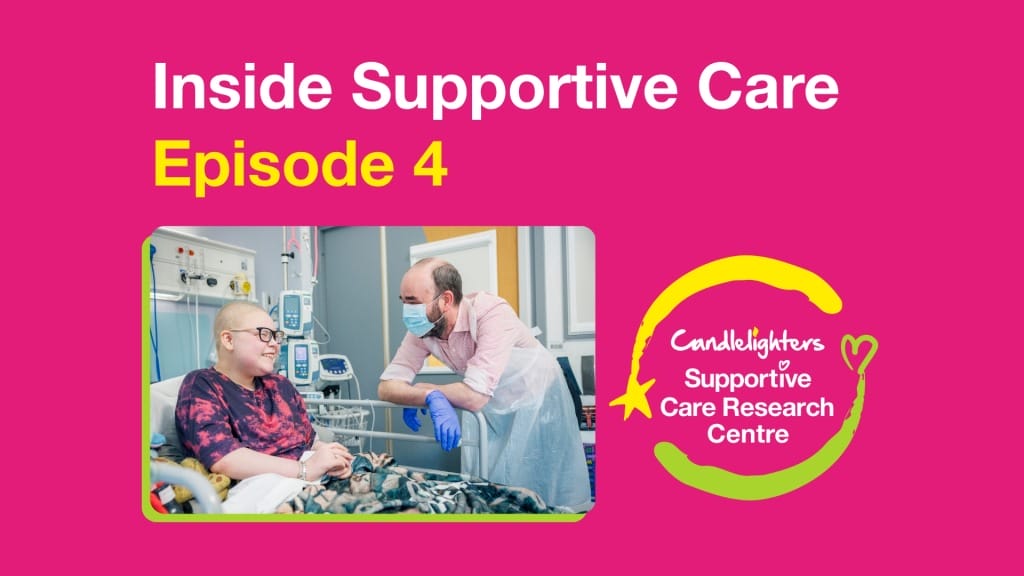
In our new video series, ‘Inside Supportive Care’, we’re taking you behind the scenes of the Candlelighters Supportive Care Research Centre.
With a £1 million, five-year investment, we’re leading research that can transform treatment experiences and improve young lives in the UK and internationally, and that all starts with putting the experiences of patients and families at the heart of the research.
In the latest episode of Inside Supportive Care, Professor Bob talks about the importance of food and diet for children and young people during a cancer diagnosis.
“We should be moving to safe food that is as ‘least restrictive’ as possible, so that we can work with changed appetites, changed tastes, to provide good nutrition but to do it in a way that lets people eat real food.” Professor Bob Phillips explains.
When a child or a young person is diagnosed with cancer, every aspect of their life is affected, including food. Things we often take for granted, like being able to enjoy a meal with friends and family, can become much more complicated during treatment.
Professor Bob Phillips explains the importance of food and nutrition for children and young people with cancer, and how it can support their physiological needs as well as their well-being and comfort throughout their cancer journey.
We know now that we should be moving away from the neutropenic diet and towards ‘safe handling approaches to food’. Through the Candlelighters Supportive Care Research Centre, with an international body, we’ve helped turn this into a clinical practice guideline.
There’s still work to be done, to understand what this means and applying this on a larger scale but moving towards safe food can help transform patients’ experiences for the better.