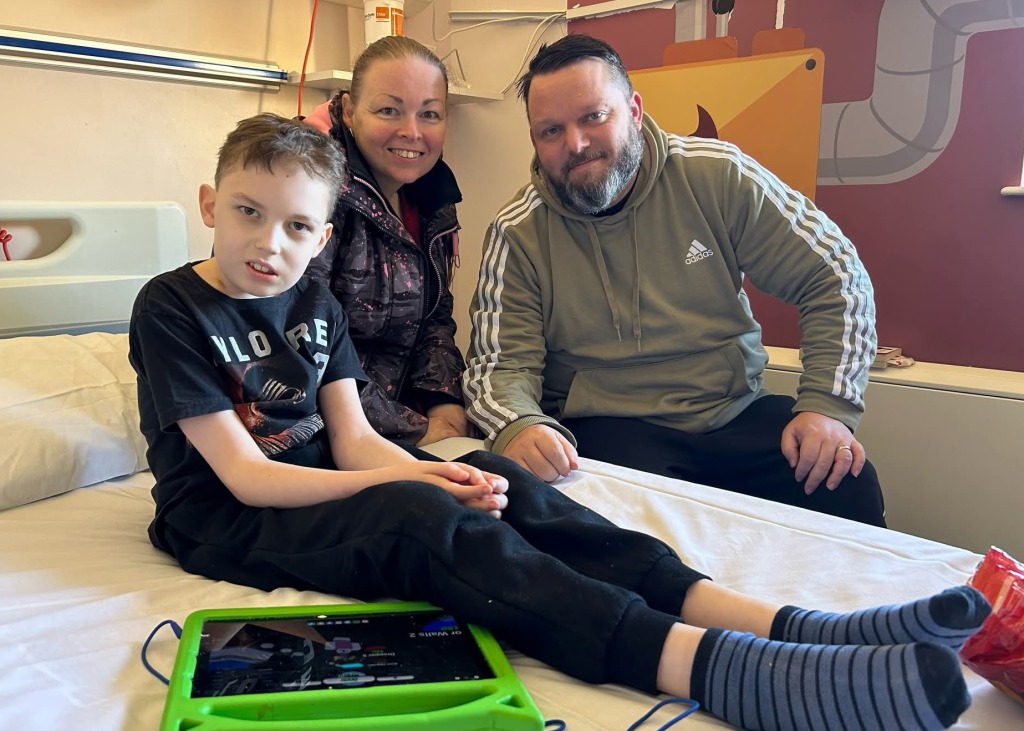
In August 2024, Jacob began feeling unwell, but “nothing major”. Then, after a day out with friends, his face and neck started to swell up. Jacob’s mum, Sarah, shares their story…
“I took him to the doctors the following day and they checked his temperature and blood pressure, but everything seemed normal, except for the swelling.
They thought it could be an allergy, but they couldn’t be sure. They gave him some antibiotics and a long list of things to check for. Then, during the night, he couldn’t breathe properly. He asked to be taken to A&E, so Matt, my husband, took him. I went to work, and Matt called me to say I needed to come because they’d found something and wanted to speak to us both.
I went straight to A&E, and they sat us down in another room and told us Jacob had a type of blood cancer. They couldn’t give us the full diagnosis but had already booked an ambulance to take us to Leeds where they could investigate further.
They did tests and found a tumour in the back of his chest which was pushing on his windpipe, which is why he was struggling to breathe at times. We realised then that because the tumour was so big, if he hadn’t been started on steroids straight away, by the end of the week, he wouldn’t have made it.
They had to keep him upright for days because it was too dangerous for him to lie down. By the time they did the biopsy, the steroids had killed off all the cells, which meant he was out of danger, but we had to wait for it to grow back or come back in his blood because it was showing he was clear of everything.
You just had it hanging over you because no one knew how long it would take to come back. You couldn’t really make any future plans. Every time you thought, ‘Is today going to be the day they find something?’
They rang us on the 4th October to say we needed to bring him back. And it turned out to be T-cell acute lymphoblastic leukaemia.
He began treatment and that’s when it really got horrible. He was really ill, not through the cancer but through the treatment. Each time we went into a new phase of treatment, he got worse and worse. It had been weird for us because despite everything at the start, he had been really quite well. We knew he had cancer, but he was running around and things still felt quite ‘normal’.
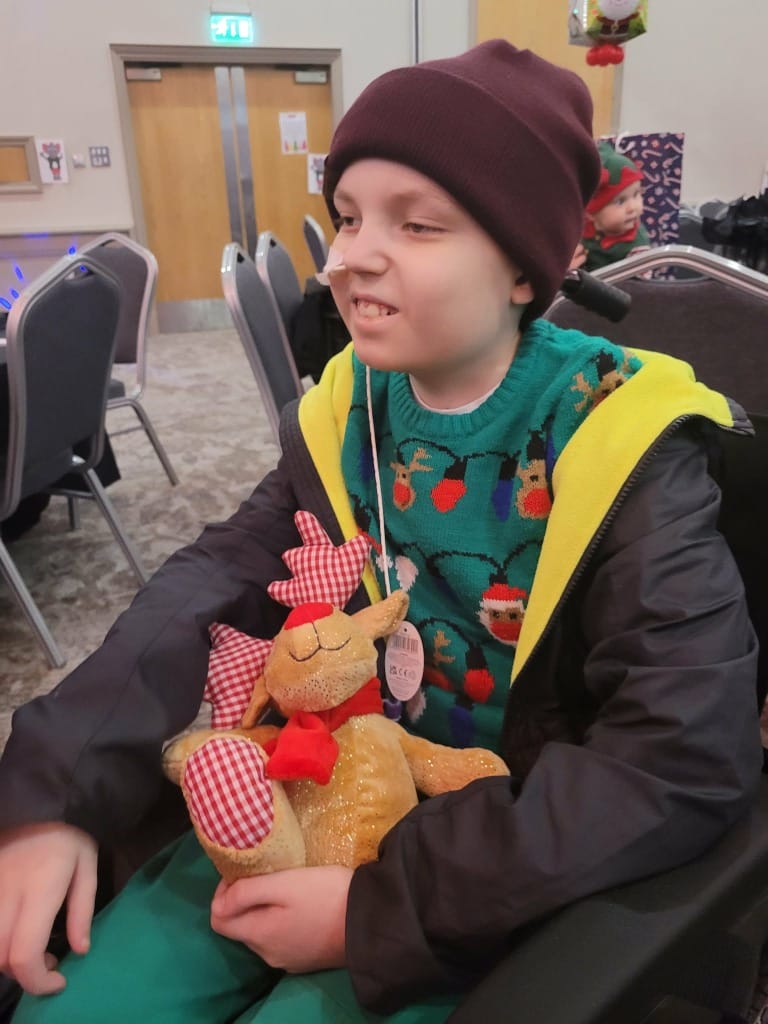
He was in Year 6 at the time but after starting treatment in October, he never went back to primary school. He was just too poorly in between all his treatments, so he missed everything, all the trips and end-of-year stuff. He has special educational needs, so in and amongst everything else, I was having to try and find a school that would be able to take him for Year 7, without knowing what condition he would be in at that point. We didn’t know whether he was going to be in a wheelchair, so we had to find an accessible school. We did manage to find somewhere but it was a really stressful time.
He had two weeks off of chemotherapy over Christmas, but that’s when he started to go downhill a lot. In January, he started on methotrexate and that was when hell began.
He was on a feeding tube by this point, but it got into a horrible cycle because even with the tube, he couldn’t keep his meds down. We couldn’t keep on top of the sickness with anti-sickness medication and then he’d been in more pain, but he couldn’t keep the pain relief down either. It was just awful. He had mucositis and was bleeding from his stomach.
By the time he needed the third round of methotrexate, just hearing that he needed to go back into hospital was traumatic for Jacob, because he knew he was going to be so unwell.
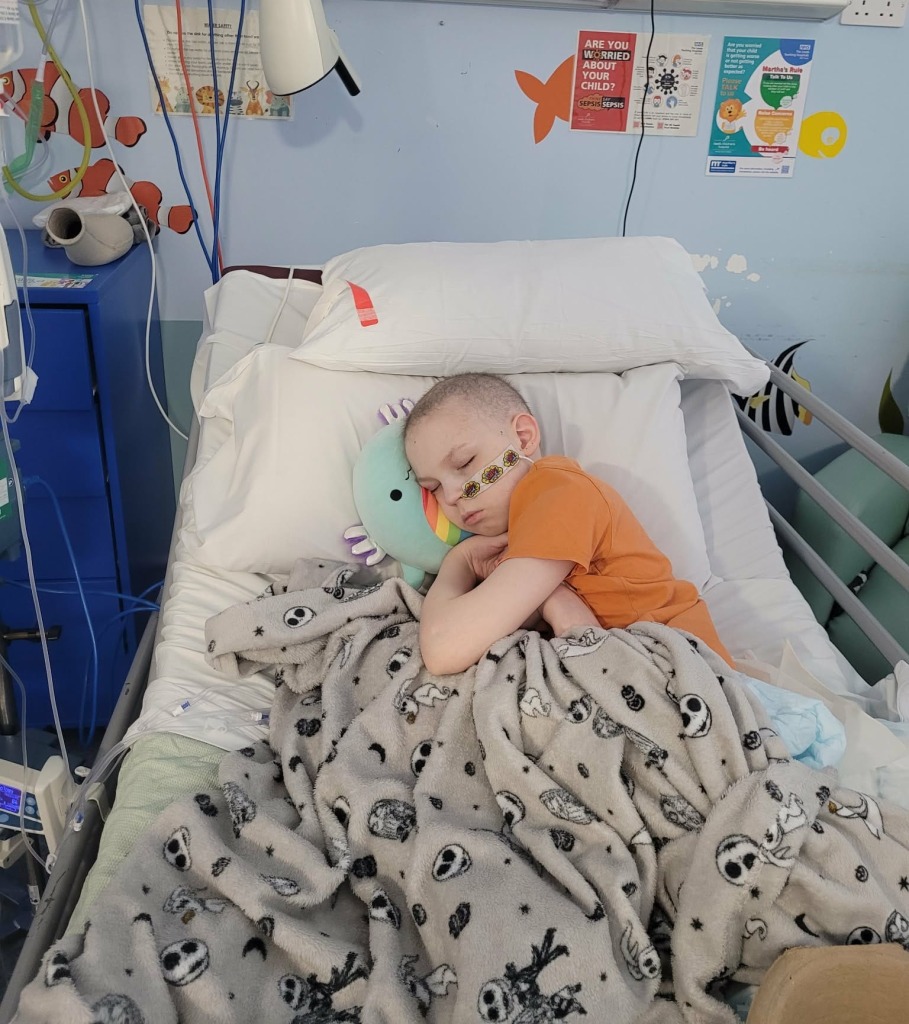
In July 2025, Jacob went onto his maintenance treatment. He was still pretty poorly for the first couple of months, and he continues to have problems, but is doing a lot more now and we’ve all adjusted to a different kind of normal now, with regular visits each month to the clinic.
At the time though, practically, it was like your life had just stopped. From that moment we were waiting for the ambulance from Dewsbury, everything became about treatment. Even when you’re not in hospital, you’re preparing to visit clinic, or you’re getting a call from someone, or arranging the district nurses. It’s all encompassing.
We’ve also got Jacob’s brother, Lucas, who was only 13 at the time. We managed to keep everything going but there were weeks and months where we couldn’t all be at home together. You just couldn’t be there for both of them at a time when we all needed each other the most.
Financially, things weren’t as bad as for some people, but it was still a worry. You don’t realise about the expenses and how they add up. Luckily, we had help from Candlelighters to provide some meals because even feeding yourself is an expense.
There are things you just can’t prepare for, like having to go and buy new clothes because Jacob had been sick, or sometimes on steroids, he’d only eat certain things. I think we spent an extra £700 in that first month. You’ve just got to do what you’ve got to do at that time. We received a new patient grant from Candlelighters which was a really big help.
Emotionally, it was a huge shock at the beginning, but you just have to get on with it because there’s so much going on. You’ve got no time to process it properly. It wasn’t really until he was home for longer periods of time and on less chemo that you start to think about it. You think you should be happier, but that’s when it sinks in – when you’re rushing round less but things still aren’t normal.
It takes everything you have to just do the housework and make sure everyone is fed and clothed. There’s no room for anything else. Now, we’re kind of just stepping back into normal life, like being able to plan and do little, normal things. The whole experience makes you think about things differently.
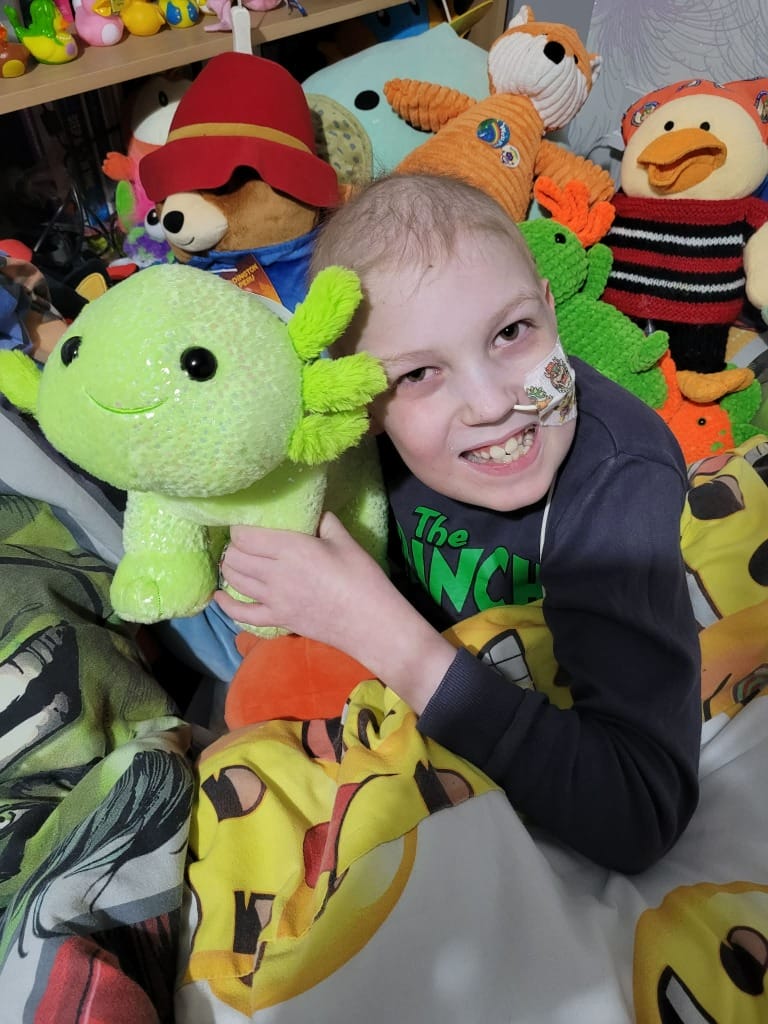
Jacob’s not one who always wants to take part in activities, but when we were in hospital, Candlelighters would always come around and chat to us anyway. They’d chat with Jacob about his games and he’s obsessed with sea creatures, so he and Helen (one of the Candlelighters Family Support Workers) would always end up chatting about sea creatures and looking them up together. When he was on steroids, he always wanted bacon, so Elaine (the Candlelighters Dinner Supervisor) would always go and get him bacon. It’s those small, personal gestures that really help.
When I was trying to sort out his arrangements for school, we had a social worker helping us, but someone from Candlelighters would come and sit with Jacob so I could go and get things sorted, without having to leave him on his own. When I had back pain, they offered a massage and reflexology, and the kitchen and the facilities supported by Candlelighters were really appreciated as well.
When we were in isolation, Candlelighters made sure someone from the team visited us every day. They’d bring anything that Jacob wanted, or things that would brighten our day a little bit.
Candlelighters also organised a cinema trip for siblings, which allowed me to have a few hours with Lucas, away from the hospital which was really nice too. We’ve popped over to The Square a couple of times when Jacob was allowed off the ward. Just to have half an hour away from the hospital – all of it made a big difference.
One brilliant thing about Candlelighters’ support is that it’s not for a specific amount of time. I might not use it going forward, but you don’t know how you’re going to feel. To know that they’re still there if needed and I don’t have to explain everything to them, they already ‘get it’, is a big relief, whether we use it or not.
You never think it’s going to be you, until it is. Even when you’re in hospital and the doctors are telling you things, your brain won’t allow you to believe it until it’s undeniable. Your life changes in an instant. You never want to need them, but when you do, you’re so grateful they’re there, thanks to people donating and fundraising.”
Thank you so much to Sarah for sharing her family’s story and helping to raise awareness of the impacts of childhood cancer.
If you’d like to support children and young people with cancer and their families consider leaving a gift in your will to Candlelighters. We know your loved ones will always come first, but if you’re able to leave a gift of any size, your support will ensure that families can receive the dedicated emotional, practical and financial support they need.
Find out more about leaving a gift in your will.