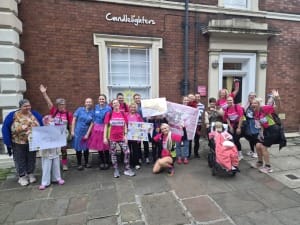
This year, Candlelighters is celebrating our 50th anniversary year supporting children and families.
Sally’s daughter Vanessa was diagnosed with Ewing sarcoma at 14, in 1984. As they navigated Vanessa’s cancer journey, Sally became involved with Candlelighters and over the next four decades she dedicated years to helping improve care and support for children and families facing cancer before becoming Candlelighters first paid member of staff.
Sally shares their story…
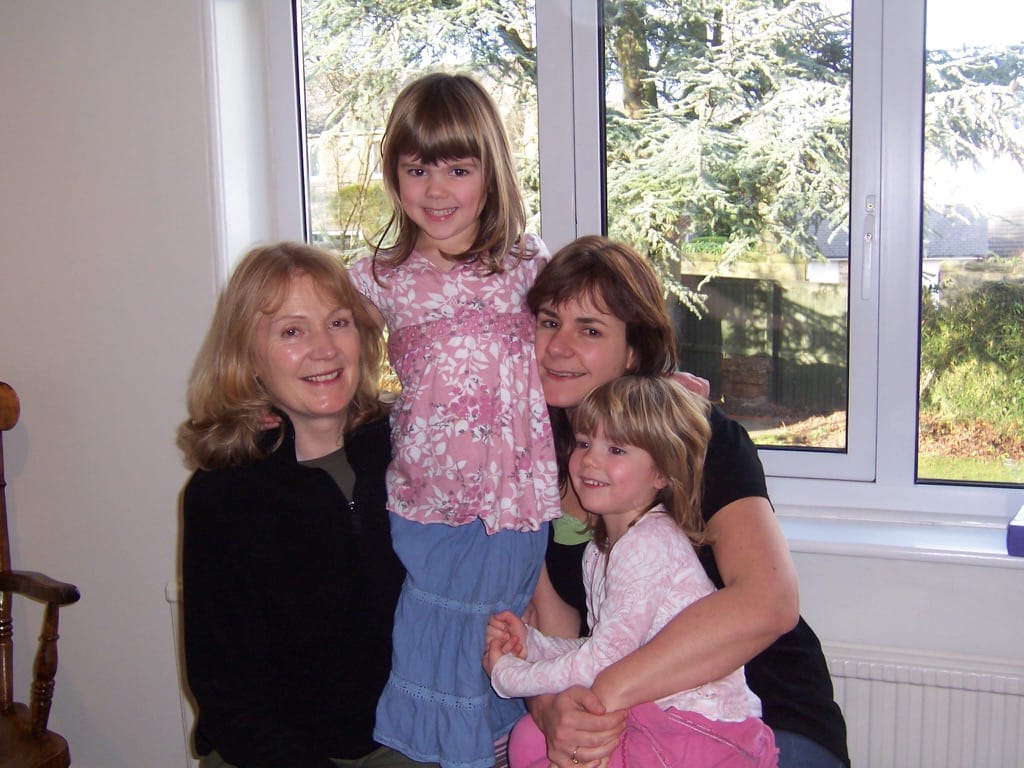
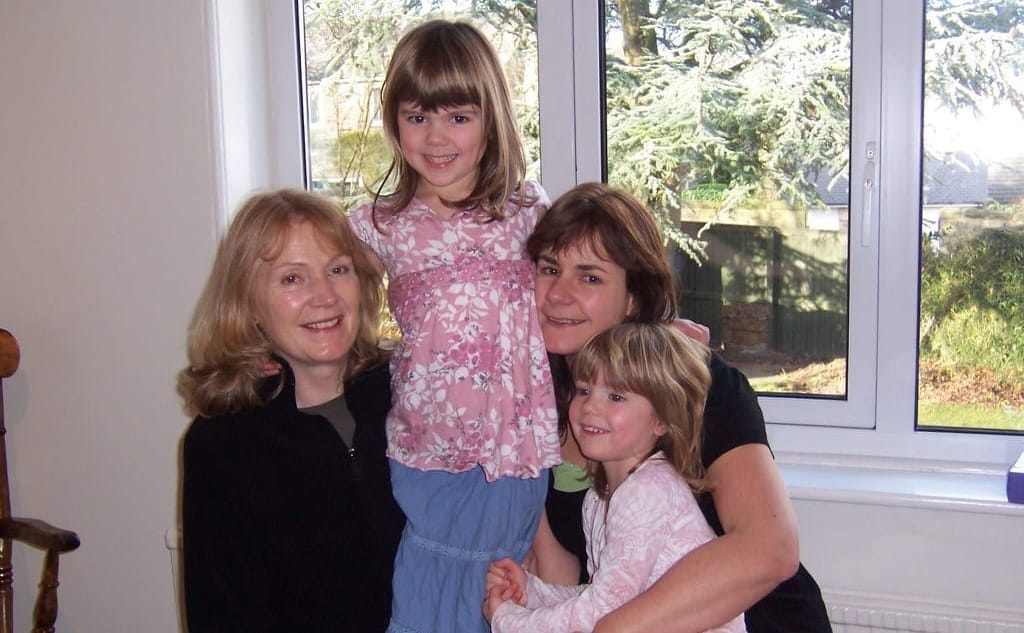
Sally (left) and Vanessa (right) with her children.
“It was 1984 when my eldest daughter, Vanessa, was diagnosed with Ewing sarcoma in her right arm. Obviously, it was a tremendous shock, you do tend to go into shock mode. You’re cross, but there’s nobody really to be angry with.
She was quite lucky because she was diagnosed quite quickly. Sometimes people have been through lots of different avenues before they’ve got a diagnosis. But it takes a little while for you to realise that the people in the unit are actually the people that are going to help you and are really kind, and very, very patient.”
Vanessa underwent nearly two years of treatment, including six months of chemotherapy and surgery to remove and replace the bone, in Birmingham.
“She did have a lot of physiotherapy… that was very, very difficult. Now she has very good movement in it. She can’t lift it above her head, but she can still French plait her hair, which I can’t do with two good arms!”
When Vanessa began her treatment, things were very different to what we know today. She stayed on Ward 15 at St James’ Hospital, which at that time was a mixed ward for the area of Leeds. Children with cancer and their families didn’t have the dedicated spaces and support they do now.
“It was very underfunded at that time, the unit. Sometimes you’d have to wait for a bed – there wasn’t necessarily always a bed available because there was great pressure on the number of beds. Then if you did get a bed, you sometimes had to wait for an IMED machine to be free.
In 1984, there was one social worker and one health visitor who had to cope with the workload of the social work team and, in the case of the health visitor, the outreach nurses. But during her treatment, things did get a little better. Ward 15 was renamed Ward 10 and was entirely dedicated to oncology patients and children with breathing difficulties.”
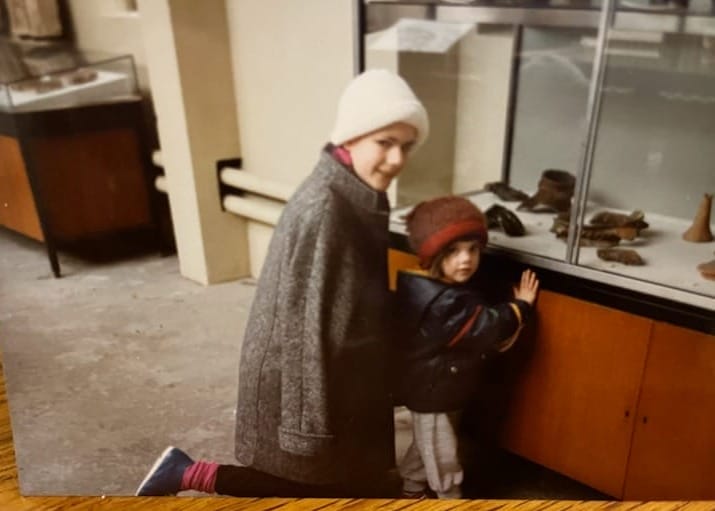
Vanessa (left) during treatment.
Vanessa was a teenager when she was diagnosed, which meant she was often more aware of her cancer, the treatment involved and how it was impacting her life and missing out on time at school and with friends.
“She understood why she was feeling awful. I mean, some of the little ones don’t understand why they’re feeling so, so awful, but she did. She understood it all, and she understood all about the how the chemotherapy worked.”
“She wasn’t that wild about school, but the minute she was told she couldn’t go to school, it was the one thing she wanted to do. After the first chemotherapy, she’d spent four days in hospital being really sick the whole time. We came home, she had the weekend, and she stayed in bed most of the time. She reappeared in her school uniform on Monday morning at quarter past nine and said, “Could you give me a lift to school?” So I took her to school!
The headmistress was in a complete panic, but she was very, very good. She made sure that everybody was aware that there was a child going through treatment for cancer.
People were really good about keeping their kids off school if they thought they had chicken pox or measles possibly. And her friends were really good. They photocopied all the notes for her on days when she wasn’t there.
She had just finished treatment when she sat her O-levels.”
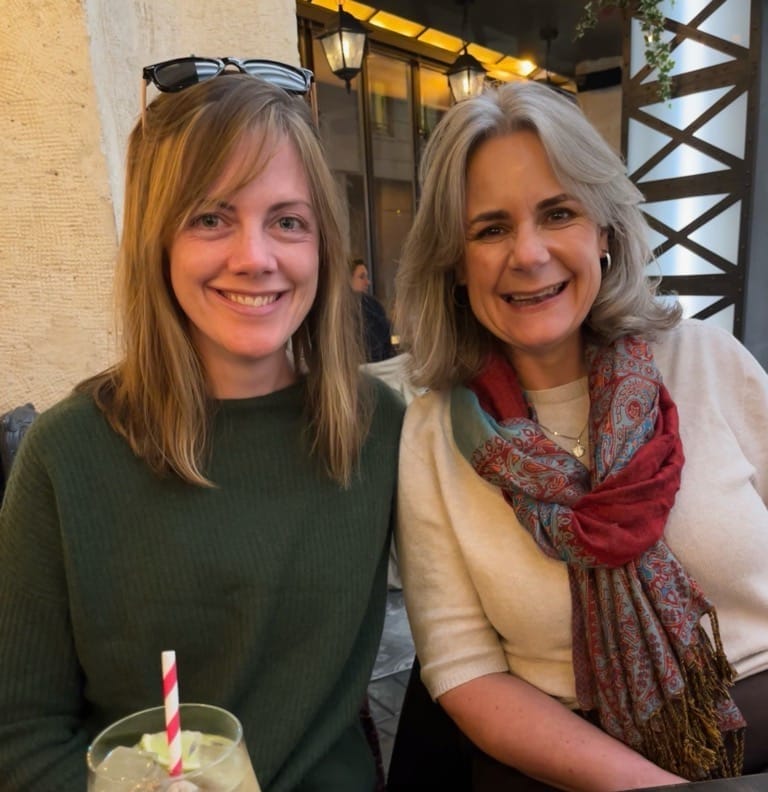
Vanessa (right) with her younger sister.
Vanessa was 14 when she was diagnosed. This year she’ll be 55. She now lives in Guernsey with her husband and their four children and works as a secondary school science teacher.
“Every time something happened, I used to ask, ‘Has that increased the survival rate or decreased it?’. I was obsessed with survival rates. For years and years after, we found it very hard to plan ahead. We thought if we booked a holiday, she’d come out of remission. I don’t really like cooking, but when we’d come into clinic for follow ups, I used to think if I baked a cake and took it in, it would be good news. It was ridiculous, really but it’s what you do.”
Though cancer care has come a long way since Vanessa was going through treatment, Candlelighters continue to drive change – working to improve cancer care and support for children and families, all thanks to a community of dedicated volunteers and fundraisers, trustees, researchers and medical professionals, families and friends, donors and supporters.
“After Vanessa finished her treatment, the patient experience evolved, which I saw firsthand from working for Candlelighters for many years. The introduction of better antiemetics, Hickman lines and Portacaths, and better social support have all been huge improvements.”